How I approach Learning Design
Every project begins with understanding the performance problem—not simply creating training.
My design process focuses on:
Discover the business need
Analyze the learners
Design practical learning experiences
Develop engaging materials
Measure learner success
Iterate based on feedback

Featured Projects
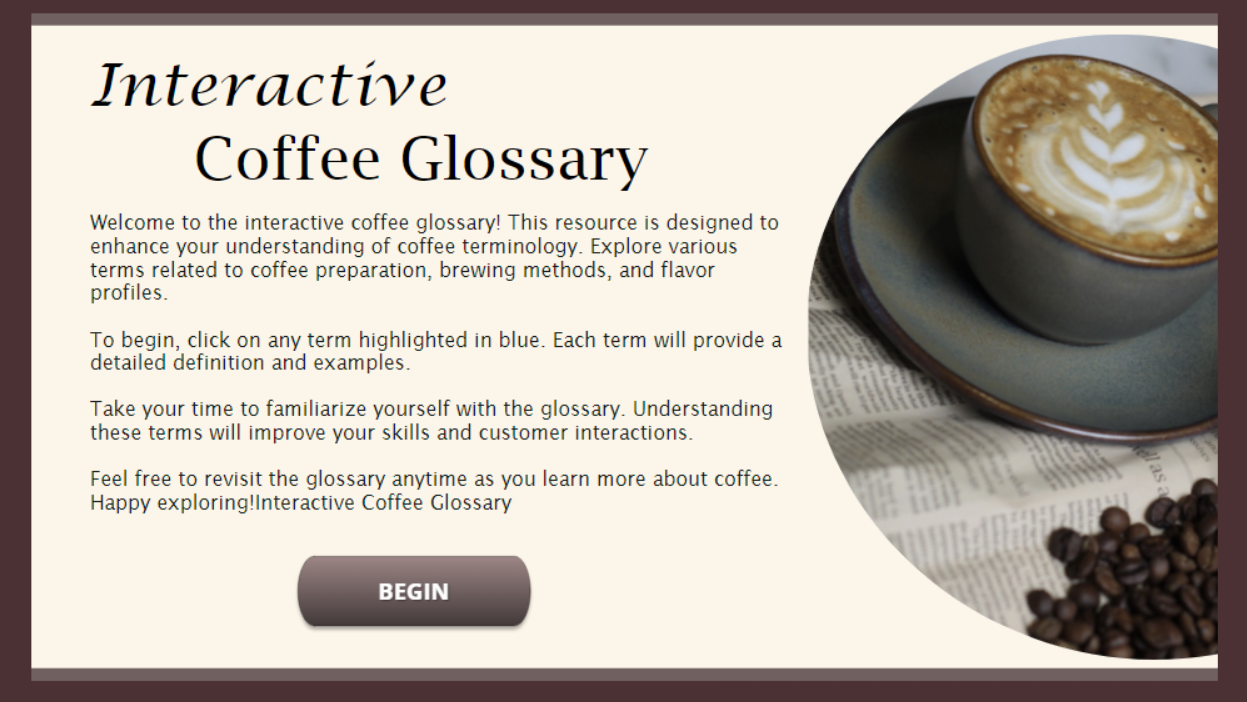
This interactive coffee glossary was designed to demonstrate how complex information can be transformed into an engaging, learner-centered resource. Rather than presenting definitions in a static list, the glossary encourages exploration through clickable interactions, visual examples, and multimedia elements that reinforce understanding.
The project showcases my approach to instructional design by combining thoughtful information architecture, intuitive user experience, and interactive learning principles. While the content focuses on coffee terminology, the design framework can be adapted to virtually any industry or training program where learners need quick, accessible reference materials.
The Interactive Coffee Glossary
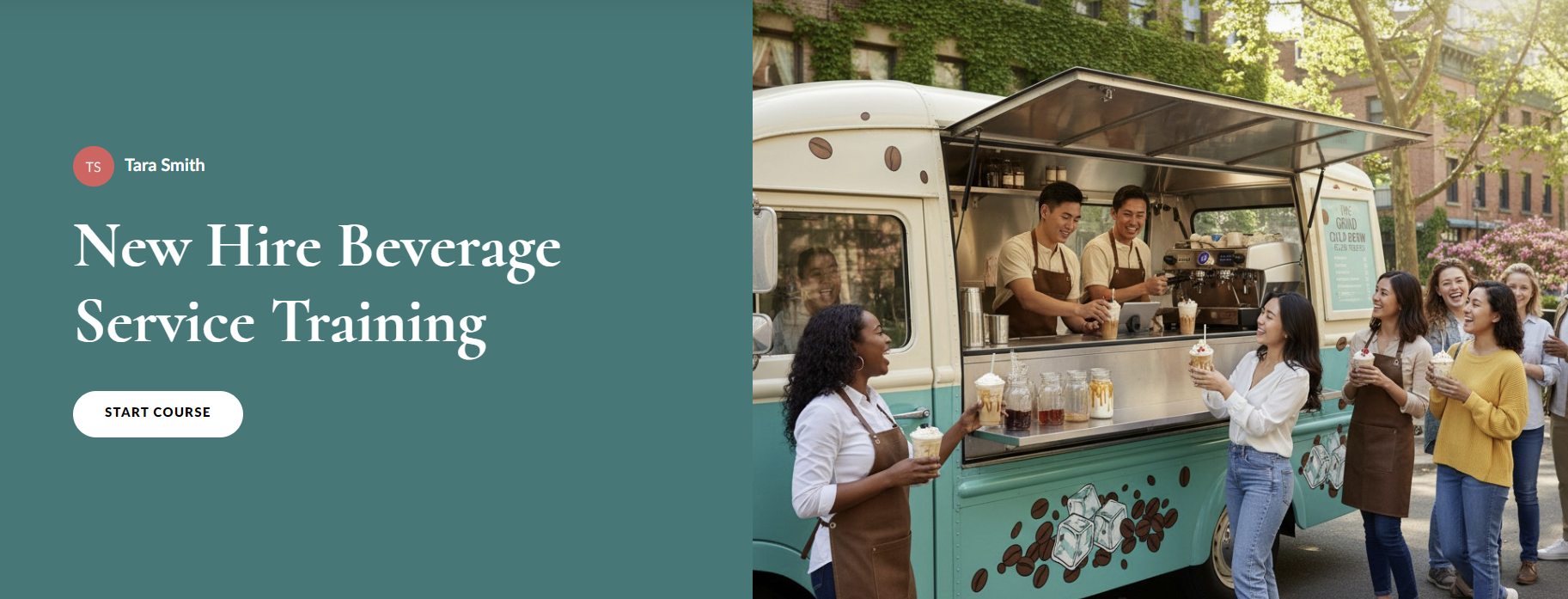
New Hire Beverage Service Training
The Challenge
New beverage employees need to learn food safety, beverage preparation standards, and customer service skills quickly while building confidence before serving guests.
My Solution
I designed a modular onboarding experience in Rise 360 that combines concise content, interactive learning activities, and realistic workplace scenarios to help learners build confidence while reinforcing critical safety and service behaviors.
Tools
Articulate Rise 360
Canva
AI-assisted image generation
Storyboarding
Learning objectives
Scenario-based learning
A Customer Service Learning Solution
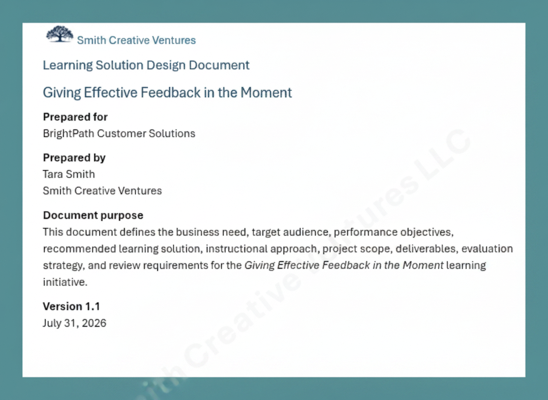
Learning Solution Design Document
The client, a customer service solutions organization, identified a pattern of delayed and unclear performance feedback among newly promoted frontline supervisors. I developed this Learning Solution Design Document to translate that business challenge into a focused, practical learning strategy.
The document defines the target audience, performance gap, learning objectives, instructional approach, project scope, deliverables, evaluation plan, and stakeholder review process. It recommends a short, scenario-based learning experience supported by a printable job aid, giving supervisors opportunities to practice realistic feedback conversations and access guidance at the moment of need.
This project demonstrates my approach to performance analysis, learning strategy, project scoping, scenario-based design, accessibility planning, and evaluation—not simply course development.
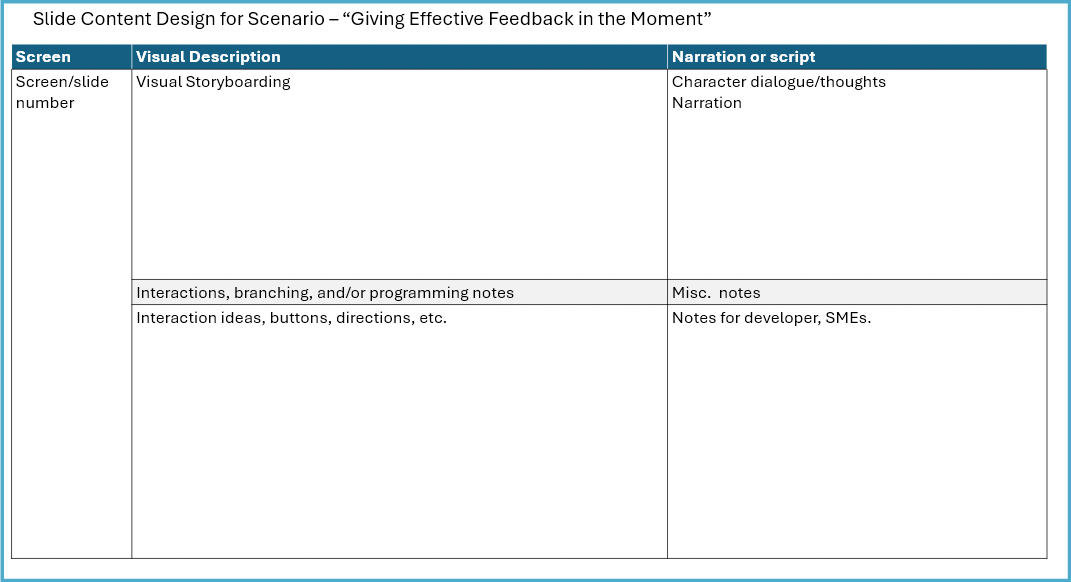
Giving Effective Feedback in the Moment: Branching Scenario Storyboard
Using the learning strategy established for BrightPath Customer Solutions, I developed a detailed storyboard for a scenario-based learning experience designed for newly promoted customer-service supervisors.
In the scenario, learners take the role of Jordan, a new supervisor who must address a performance concern with an experienced employee. Across a series of realistic decision points, learners practice choosing the right time and setting for feedback, describing observable behavior, responding to resistance, and establishing clear expectations and follow-up actions.
The storyboard translates the instructional strategy into a development-ready plan that includes on-screen content, dialogue, learner directions, branching decisions, response-specific feedback, character reactions, media recommendations, accessibility considerations, and programming notes. This project demonstrates my ability to transform a business need into an engaging, practical learning experience that supports real-world behavior change.